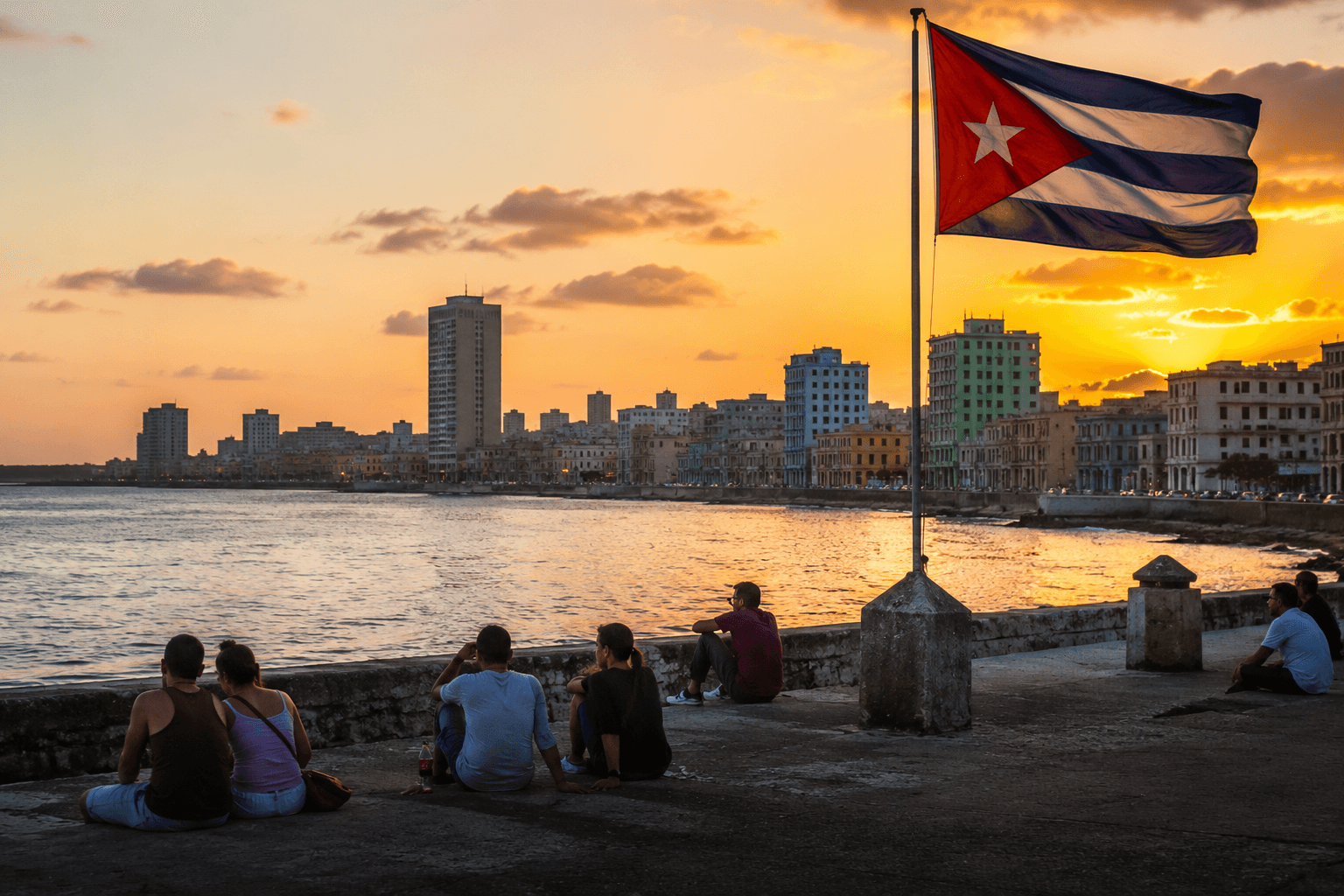
For more than six decades, Cuba has occupied a unique place in global politics. From Cold War battleground to symbol of revolutionary resilience, the island has repeatedly defied predictions of collapse. Yet today's Cuba faces challenges unlike any in its modern history.
The question is no longer whether Cuba can survive. It has demonstrated extraordinary resilience. The real question is whether Cuba can reinvent itself for the twenty-first century.
The Cuban economy remains constrained by a combination of domestic inefficiencies, limited private-sector growth, declining productivity, and the continuing impact of U.S. sanctions. At the same time, the country faces growing demographic pressures as younger generations seek opportunities abroad, contributing to population decline and an aging workforce.
These realities present Havana with a difficult choice: preserve the existing economic model with incremental adjustments or pursue broader reforms capable of attracting investment, encouraging entrepreneurship, and integrating Cuba more deeply into regional and global markets.
The experience of countries such as Vietnam offers an important lesson. Economic liberalization does not necessarily require political transformation at the same pace. Cuba's leadership may increasingly look toward models that maintain political continuity while allowing greater market flexibility and foreign investment.
Geopolitically, Cuba is entering a more complex world than the one it navigated during the Cold War. The island can no longer rely on a single strategic patron. Instead, it must balance relations with major powers including the United States, China, Russia, the European Union, and regional partners across Latin America.
China's growing economic footprint presents opportunities for infrastructure development, telecommunications, renewable energy, and trade. Russia continues to view Cuba as an important diplomatic partner in the Western Hemisphere. Meanwhile, European investors remain interested in tourism and commercial development despite economic uncertainties.
Yet none of these relationships can fully substitute for the economic potential of improved relations with the United States.
Geography remains Cuba's greatest strategic advantage. Located less than 100 miles from Florida and positioned at the gateway between the Gulf of Mexico, the Caribbean, and the Atlantic Ocean, Cuba possesses natural advantages that few nations can match. Tourism, logistics, renewable energy, biotechnology, and regional trade could become pillars of future growth if supported by meaningful reforms.
Another critical factor will be technology. Cuba's increasingly connected population is gaining access to information, digital services, and global markets. A digitally empowered generation may become the driving force behind economic modernization and social innovation in the years ahead.
However, modernization alone will not solve every challenge. Cuba must also address infrastructure deterioration, energy shortages, housing needs, and declining public confidence in economic prospects. These issues require long-term planning, institutional effectiveness, and a willingness to adapt to changing realities.
Looking ahead, the most likely future for Cuba is neither revolutionary transformation nor sudden collapse. Instead, the island appears destined for gradual evolution—a slow and often uneven process of reform shaped by economic necessity, demographic realities, and geopolitical competition.
History has shown that Cuba rarely follows conventional expectations. Its future will likely be defined not by dramatic events but by its ability to balance continuity with change.
The coming decade may prove decisive. If Cuba can harness its human capital, strategic geography, and international partnerships while implementing pragmatic reforms, it could emerge as one of the Caribbean's most important economic and diplomatic actors. If not, the pressures of stagnation and emigration may continue to limit its potential.
Cuba's future remains unwritten. What is certain is that the decisions made today will shape the island's trajectory for generations to come.