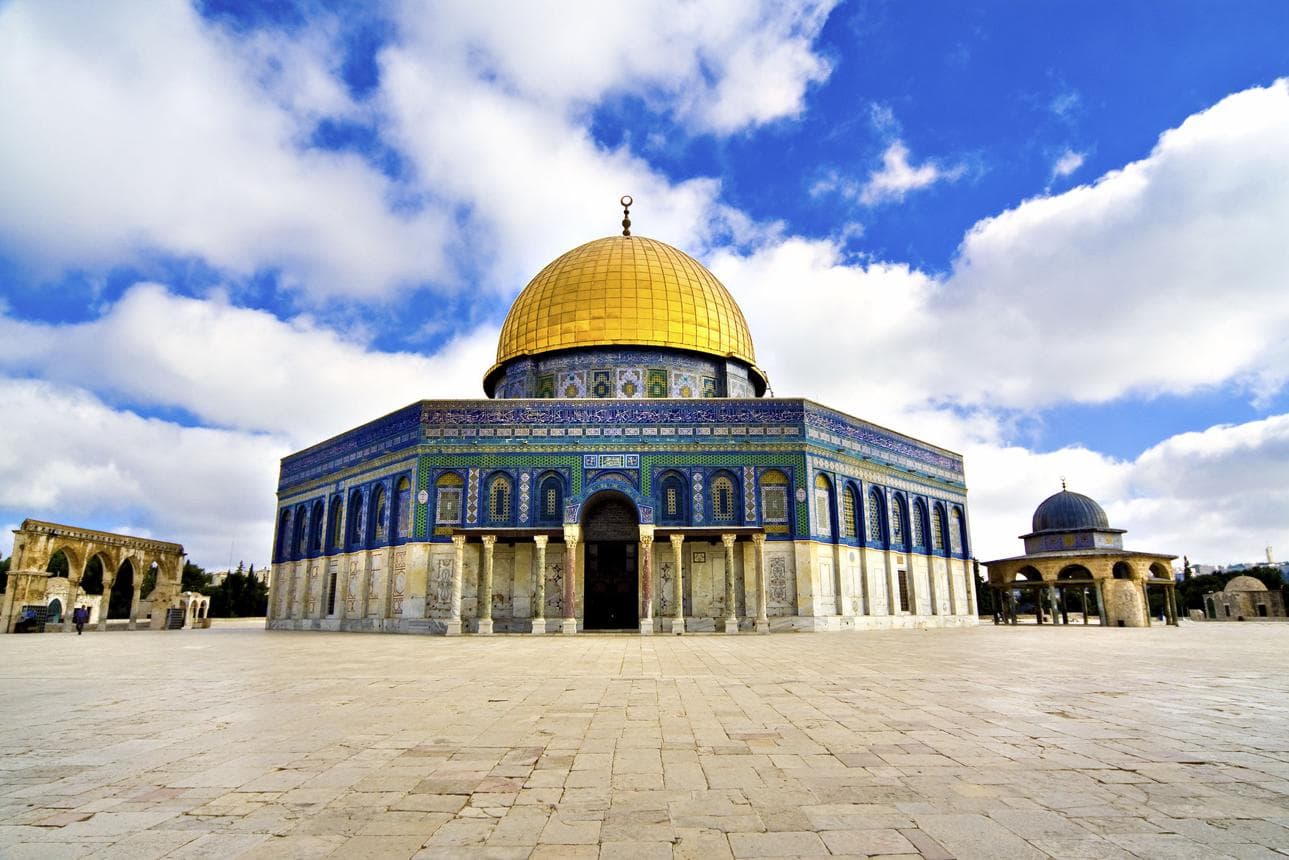
At the heart of Jerusalem's Old City lies a sacred plateau known to Muslims as the Noble Sanctuary (Al-Haram Al-Sharif) and to Jews as the Temple Mount. For Muslims, it contains Al-Aqsa Mosque and the Dome of the Rock, making it Islam's third holiest site. For Jews, it is believed to be the location of the First and Second Temples, making it the holiest site in Judaism. The collision of these two sacred narratives has produced one of the world's most sensitive religious and political disputes. Since Israel captured East Jerusalem during the 1967 Six-Day War, a delicate arrangement has governed the compound. Under this status quo, the Islamic Waqf administers the site while Israel controls overall security. Non-Muslims may visit, but traditionally only Muslims were permitted to pray there. The idea of rebuilding a Third Temple is not a conspiracy theory. It is a genuine religious aspiration held by some Jewish groups. Organizations such as the Temple Institute openly prepare educational materials, ritual objects, and research related to a future temple. Their activities are public rather than secret. Supporters describe these preparations as a religious expression and preservation of Jewish heritage. Critics, particularly among Palestinians and Muslim observers, view the same activities as evidence of a long-term effort to transform the current reality on the Temple Mount. The critical question is whether these religious aspirations translate into government policy. After reviewing publicly available records, no verified evidence demonstrates an official Israeli government plan to demolish Al-Aqsa Mosque. However, concerns have intensified because influential politicians increasingly challenge restrictions that once governed the site. For many Palestinians, the concern is not necessarily an immediate demolition plan. Instead, they fear a gradual process. This concern is fuelled by several developments: Increased visits by Jewish activists. Growing calls for Jewish prayer rights. Statements by far-right political figures. Security restrictions affecting Muslim worshippers. Debates over sovereignty at the compound. Palestinian leaders argue these developments represent incremental changes that could eventually alter the site's religious character. Supporters of this concern frequently compare the situation to other disputed religious sites where administrative changes preceded larger political transformations. One of the most controversial aspects of the debate concerns the Messiah. Certain religious groups believe the restoration of a temple forms part of a future redemptive era. However, Jewish views are far from uniform. Some Orthodox authorities maintain that only divine intervention can authorize a future temple. Others support preparation efforts while rejecting any attempt to remove existing Islamic structures. Many secular Israelis have little interest in rebuilding a temple at all. Discussions among Israeli and Jewish communities frequently reveal significant disagreement over whether a Third Temple should even be pursued. The claim that a future Messiah would "rule the world from the Third Temple" is based on specific religious interpretations rather than a universally accepted doctrine.
Investigators examining Muslim concerns identify several documented developments: Recent years have witnessed repeated challenges to traditional restrictions on prayer at the site. Far-right Israeli figures have openly advocated expanding Jewish religious activity there. Israeli National Security Minister Itamar Ben-Gvir has publicly visited the compound and stated that he prayed there, despite the long-standing status quo arrangement. Experts warn that such actions increase fears among Palestinians that the status quo is eroding. Some analysts argue that the arrangement established after 1967 has come under unprecedented pressure. These developments do not prove a demolition plan, but they help explain why fears remain widespread throughout the Muslim world. Several facts challenge the claim that a state-backed demolition plan exists. Successive Israeli governments have repeatedly stated support for maintaining the status quo. Prime Minister Benjamin Netanyahu has publicly reaffirmed this position on multiple occasions. The site remains administered by the Islamic Waqf. Jordan continues to hold a recognized custodial role. No official Israeli legislation authorizes the destruction of Al-Aqsa Mosque. No verified government document outlining such a plan has been publicly produced. These facts do not eliminate suspicion among critics, but they represent significant evidence against claims of an established state policy. The significance of Al-Aqsa extends far beyond Jerusalem. Any perceived threat to the mosque resonates across the Muslim world. Governments throughout the Middle East closely monitor developments at the site. Analysts consistently warn that changes affecting Al-Aqsa have the potential to trigger regional unrest. Historical examples demonstrate that events at the compound have repeatedly sparked wider confrontations. Because of this, even symbolic actions often carry consequences far beyond their immediate context.